
- 6,800 m² facility in Hengli Town, Dongguan — founded 2005, 100+ people.
- XRF verification on every incoming lot against the mill certificate.
- a floor of 100-plus machines matched to geometry and machinability.
- Honest titanium boundary — stress relief above 500 °C outsourced.
Where is the factory, and why does location matter for material?
The facility sits at No. 8, Shuibian Songyuan Road, Hengli Town, Dongguan, Guangdong, China 523470 — in a dense machining supply region. Location matters for material because it shortens the supply side: raw bar stock in a range of alloys is sourced locally and quickly. A material's availability does not become a hidden lead-time cost.
For an overseas buyer, that geography shows up as shorter, more predictable lead times. A factory in a supply-chain-rich region can get bar stock and secondary processes like anodizing and heat treatment without waiting weeks, and that speed is ultimately a line on the material-process match — the right alloy, available when it is needed, is what keeps a quoted lead time from slipping. The address is not a formality; it is part of the material supply story.
How does the factory verify material at the door?
Material verification is the factory's first quality act, and it happens before the first chip is cut. Every incoming lot is checked by XRF spectrometer against its mill certificate — the mill certificate states the alloy, the XRF confirms the composition, and a substituted or mixed lot is caught at the door. The grade on your drawing is the grade that reaches the machine.
XRF reads elemental composition in seconds, without damaging the bar, so a 6061 lot is told apart from a 7075 lot, and a 303 lot from a 304 lot, before either reaches a spindle. The mill certificate is the supplier's claim; the XRF is the factory's independent check. A substituted alloy that slips past the door becomes a part that fails in service, and no amount of machining skill recovers a wrong material. The check at the door is the cheapest point in the whole process to catch that failure, which is why it is the first step, not an audit afterthought.
How are machines matched to each material?
The machine is chosen to suit the material, not the other way around. Milling, turning, mill-turn, and grinding are matched to geometry and machinability: free-machining grades like 303 stainless and 360 brass run fast on standard equipment, titanium runs slower with the cycle time the material demands, and plastics use plastic-specific feeds and tooling. The match is made deliberately, not forced.
| Area | Count | Material fit |
|---|---|---|
| CNC milling (3/4/5-axis) | 50+ / 20+ / 20+ | Prismatic parts in metal and plastic |
| CNC turning | 25+ lathes | Round parts across alloy families |
| Precision grinding | 7+ grinders | Tight finishes on hard alloys |
| Inspection instruments | 20+ | XRF plus CMM verification |
The machine park is only as honest as the material it is fed. A titanium part run on the same spindle as aluminum will cut, but the cycle stretches and the tool budget climbs, so the factory separates the material work instead of promising one speed for every alloy. The machine brands — Mazak and Brother for milling, TSUGAMI with Citizen and Star for turning, Sodick for grinding — are named because the fit to the material is part of the match. Your check is whether the shop can say, for each material on the drawing, which machine and which parameters carry it.
What is the honest boundary on titanium?

Titanium machines on the same equipment, but its stress relief runs higher than 500 °C — above what the in-house ovens reach — so that step goes to a qualified partner. The factory states the boundary rather than over-claiming it. That honesty is the material handling discipline you should want: the factory tells you exactly where the real process runs, instead of quietly outsourcing a step it cannot do.
The boundary is a signal, not a weakness. Every shop has boundaries; the difference is whether they are named. A shop that claims full titanium capability end-to-end either owns an oven it does not or outsources a step it will not name, and an unnamed step is a risk you inherit. A shop that says "titanium stress relief leaves the building, here is the partner" has given you the information you need to audit that step yourself. That is what material honesty looks like in practice.
What certifications does the factory hold?
Certification means the material verification and the process control are documented and third-party-surveilled.
| Standard | Certificate number | Scope |
|---|---|---|
| ISO 9001:2015 | 116024/A/0001/UK/En | Machining of metal parts |
| IATF 16949:2016 | 131941/A/0001/SM/En | Manufacture of CNC metal machining parts (excludes product design, Clause 8.3) |
| ISO 14001:2015 | 116024/B/0001/UK/En | Environmental management related to machining of metal parts |
Honest scope note: IATF 16949 excludes product design under Clause 8.3 — a build-to-print factory, which keeps the material and design responsibilities unambiguous.
How many machines and people run the facility?
The facility runs 100+ production machines — milling, turning, mill-turn, and grinding — plus 20+ inspection instruments, staffed by 100+ people with 80%+ skilled technicians and 60% holding 5–10 years on the job. Workforce depth matters for material handling because a senior workforce knows how each alloy behaves under the tool, which is the difference between a match made on paper and one that holds on the floor.
Turnover is a hidden cost you inherit: a rotating cast of operators re-learns the drawing on your time and your scrap. A stable floor builds the tolerance and the speed into muscle memory, so a repeat order comes back identical to the first. When you read a factory, the number of machines tells you its capacity; the tenure of its people tells you whether that capacity is under control. Both are material-handling facts, because a machine is only as good as the person setting it for the alloy in the chuck.
How does the factory source and store raw material?
Material handling begins before the bar reaches the door. Raw bar stock in the common alloys is sourced locally from the Pearl River Delta supply chain, which shortens the distance between mill and machine and keeps availability from becoming a lead-time problem. The factory stores material by grade, so a 6061 bar is not racked beside a 7075 bar waiting to be mixed, because a mixed lot is exactly where a substitution begins.
The XRF check at receiving then confirms what the rack says, closing the loop between sourcing, storage, and the machine. The discipline is the same at every stage: keep the grades separate, verify each lot against its certificate, and trace the bar to the part. If you ask how material is sourced and stored, you are asking the question that catches the failure before it starts, and a factory that can answer it by name is the one that has the material under control.
What inspection equipment sits on the floor?
The inspection bench covers both halves of the quality question — material and dimension — and it sits beside the machines, not in a separate room two weeks away. The XRF spectrometer confirms the alloy at the door. Hexagon GLOBAL S CMMs verify dimensions, with a vision measuring machine and a gear measuring center for features a touch probe cannot reach. A KEYENCE laser microscope and a SURFCOM profile instrument read surface finish, and a micro-Vickers hardness tester plus a Fischer coating thickness gauge confirm the material and coating after treatment.
Twenty-plus instruments matter for one reason: verification that is slow becomes verification that is skipped. When the measuring equipment is close to the machine, a defect is caught at the source, before it has been boxed and shipped and turned into your problem. The reports those instruments produce — the XRF record, the CMM report, the SPC chart — are the documents you can audit from a distance, which is what turns the factory's material claim into something you can check instead of trust.
How does the factory keep the material record traceable?
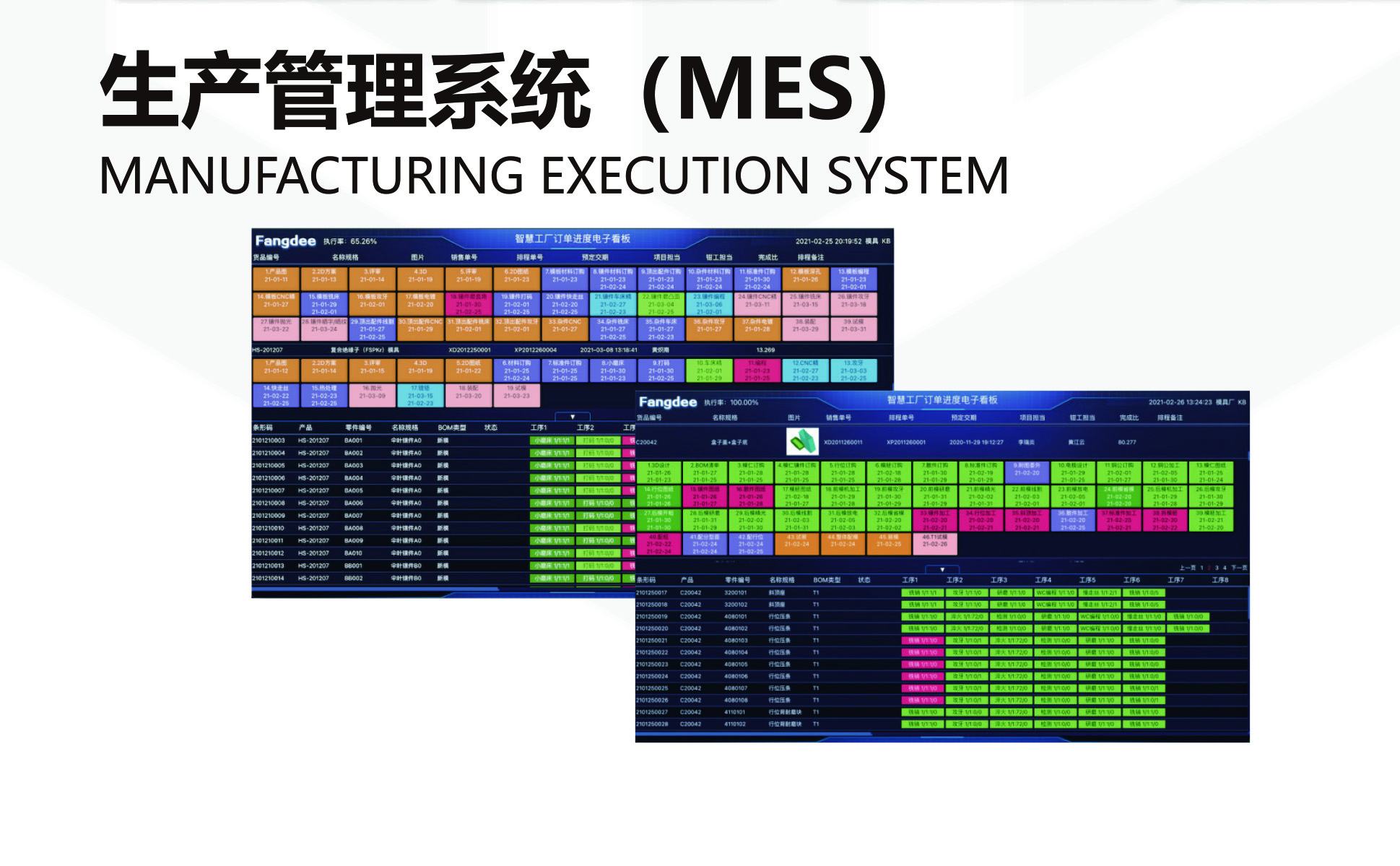
Material verification is the first half; traceability is the second. The MES/ERP system records raw-material source and usage, process parameters, machine data, production batch, machining time, operator, and inspection results per lot, so any component can be traced back to its raw material and its process. When a material question surfaces, the answer is in the record, not in a guess.
For regulated buyers, traceability is a requirement; for everyone else it is cheap insurance against the costliest failure — the one where you cannot prove which parts are suspect and must treat them all as such. The chain begins with the XRF check against the mill certificate and runs through the lot number, the machine, and the inspection result. That full chain is what lets a buyer isolate a problem instead of replacing an order, and it is the difference between a factory that can contain a failure and one that can only react to it.
Can you verify the factory's material handling before ordering?
Yes, and you should. A factory visit is welcome, and a live video walk of the floor and inspection room is available for buyers who cannot travel. The purpose is to verify the material handling and the machines yourself, because a material-process match that only exists on paper is not a match at all.
Walk the floor in the order the part travels: incoming material receiving, the machine line, the inspection bench, and the shipping area. At each stop, ask to see the evidence — a material certificate being checked against the incoming lot, a control chart on the wall, a CMM report being written — rather than accepting a description of the system. A factory that says yes to a walk-through in minutes is one whose floor is its own; a factory that deflects is one whose floor belongs to someone else. The live walk is the cheapest audit you can run, and it costs far less than the scrap it prevents.
How does scale protect your schedule?
Scale is schedule insurance. A 6,800 m² facility running 100+ people has the slack to start your job when you need it rather than when a machine frees up, and the redundancy to absorb a rush order without breaking the queue. Machine count is not vanity; it is the difference between a shop that can take your order and one that queues it behind someone else's.
For the material-process match, scale means the right machine for the material is more likely to be free. A shop with one lathe cannot run your 303 stainless job and someone else's titanium job at once; a shop with 25+ lathes and a named machine mix can put each material on the equipment that fits it. Scale is the probability that your order ships on time with the process that was quoted, every time, for the life of the program, which is the quiet half of what a factory sells.
Which questions expose a factory's material handling?
- Ask where the raw bar stock is sourced and how each incoming lot is XRF-checked.
- Ask which machines carry each material family, not just the total count.
- Ask which steps leave the building — titanium stress relief above 500 °C should be named.
- Ask for a live floor walk to see the material handling yourself.
- Ask for a traceability record that ties a part back to its lot and process.
Run these five questions against any factory — including this one — and the material handling stops being a claim and becomes something you can check. A factory that names its grades, its machines, its boundaries, and its records is the one that has the material under control; a factory that answers in generalities is the one that has not. The material handling is the foundation the whole match is built on, and these questions are how you test that foundation before you build on it.
What this shop actually runs
Ask for capability evidence and the answer should be specific. The facility behind this guide runs 100+ CNC machines on a 6,800 m2 floor in Dongguan, China, with 100+ staff. The machine list, by category:
- 5-axis machining centres (10+) - Mazak VARIAXIS I-600 (510/910/510 mm travel, 12,000 rpm, 22 kW, 71.6 N·m, 30-tool BT40) and Mazak INTEGREX I-250H S (B-axis 0.0001°, 24 kW, 124 N·m, 38-tool HSK-A63). Made for compound-angle parts, single-setup multi-face prismatic work, and aerospace fittings where datum transfer loss is unacceptable.
- 3-axis / 4-axis machining centres (50+) - Brother SPEEDIO S500Z2N / S700Z2N (10,000 rpm, 14/21-tool ATC, 0.7 s tool-to-tool, Z-axis 2.2 G) and Mazak VCE-430A L / VCE-570C L (10,000 rpm, 118 N·m, 24-tool ATC). Made for prismatic parts, plates, brackets, housings.
- Swiss-type turning centres (10+) - Citizen Cincom A20-3F7 (Φ20 mm, 10,000 rpm), TSUGAMI B0206-III / B0205-III (Φ20 mm, 0.1 µm), STAR SR-32JII / SR-32J Type N (Φ32 mm, 8,000 rpm). Made for long, slender rotational parts at ±0.002 mm.
- CNC turning centres (20+) - HEADMAN T70M/1250 (720 mm swing, 117 mm bore, 3,000 rpm, BMT75 12-station turret). Made for shafts, bushings, flanges up to ±0.002 mm.
- Wire EDM (5+) - Sodick AQ535L (550/350/300 mm travel, ±20° taper, 800 kg workpiece). Made for hardened tool steel, internal splines, sharp internal corners that milling cannot reach.
- Inspection: Hexagon CMM + 20+ gauges - Hexagon CMM for coordinate measurement, plus vision system, profilometer, hardness tester, coating thickness gauge, XRF for material verification. The 10:1 rule (gauge 10x more accurate than the band) is applied to every feature.
- Machine highlights - VARIAXIS I-600: one-setup multi-face 5-axis + MAZA-CHECK auto-calibration; INTEGREX I-250H S: DONE-IN-ONE mill-turn, B-axis 0.0001° + Ai thermal shield; SPEEDIO S500Z2N / S700Z2N: Z-axis 2.2 G + 0.7 s ATC; Swiss-type: guide-bush switchable + 0.1 µm resolution.
Tolerances held: milling ±0.003 mm, turning ±0.002 mm, grinding and wire EDM ±0.002 mm. Capability: Ppk >= 1.67 initial and Cpk >= 1.33 in production on key characteristics.
Certifications: ISO 9001:2015 (116024/A/0001/UK/En), IATF 16949:2016 (131941/A/0001/SM/En, clause 8.3 design excluded, disclosed openly) and ISO 14001:2015 (116024/B/0001/UK/En), issued to Dongguan Zhuohang Ltd, USCC 91441900MA4UWT6X39, established 2005.
Service area: Austria, Belgium, the Czech Republic, Denmark, France, Germany, Greece, Hungary, Ireland, Italy, the Netherlands, Spain, Sweden and the United Kingdom in Europe; Brazil, Canada, Mexico and the United States in the Americas; China, Israel, Japan, Singapore and Sri Lanka in Asia; Australia and New Zealand in Oceania; and South Africa in Africa — built in China, shipped worldwide.
Contact: Felipe Iglesias, [email protected], +86 13126536955.
Verify this factory's material handling.
Send your drawing to [email protected] or call +86 13126536955, or request a live floor walk before you commit.
Frequently Asked Questions
Where is the factory located?
No. 8, Shuibian Songyuan Road, Hengli Town, Dongguan, Guangdong, China 523470. It is a 6,800 m² facility founded in 2005, with 100+ production machines and 20+ inspection instruments.
How does the factory verify material at the door?
Every incoming lot is checked by XRF spectrometer against its mill certificate before it reaches a machine. A substituted or mixed alloy is caught at the door, so the grade on your drawing is the grade in your part.
What certifications does the factory hold?
ISO 9001:2015 (116024/A/0001/UK/En), IATF 16949:2016 (131941/A/0001/SM/En), and ISO 14001:2015 (116024/B/0001/UK/En). IATF 16949 excludes product design under Clause 8.3 — a build-to-print operation.
How are machines matched to each material?
Milling, turning, mill-turn, and grinding are matched to geometry and machinability. Free-machining grades run fast on standard equipment; titanium runs slower; plastics use plastic-specific feeds. The machine is chosen to suit the material.
How many machines and people run the facility?
100+ production machines — milling, turning, mill-turn, and grinding — plus 20+ inspection instruments, staffed by 100+ people with 80%+ skilled technicians and 60% holding 5–10 years of experience.
Can I visit or verify the factory before ordering?
Yes. A factory visit is welcome, and a live video walk of the floor and inspection room is available for buyers who cannot travel. The purpose is to verify the material handling and the machines yourself.
Continue reading: Custom Components Services · Custom Components Parts Manufacturer · Custom Components Quality Control
Standards referenced on this page
- ASTM B348/B348M-21 — Standard Specification for Titanium and Titanium Alloy Bars and Billets
- ASTM A582/A582M-12 — Standard Specification for Free-Machining Stainless Steel Bars
- ISO 9001 — Quality management systems — Requirements