
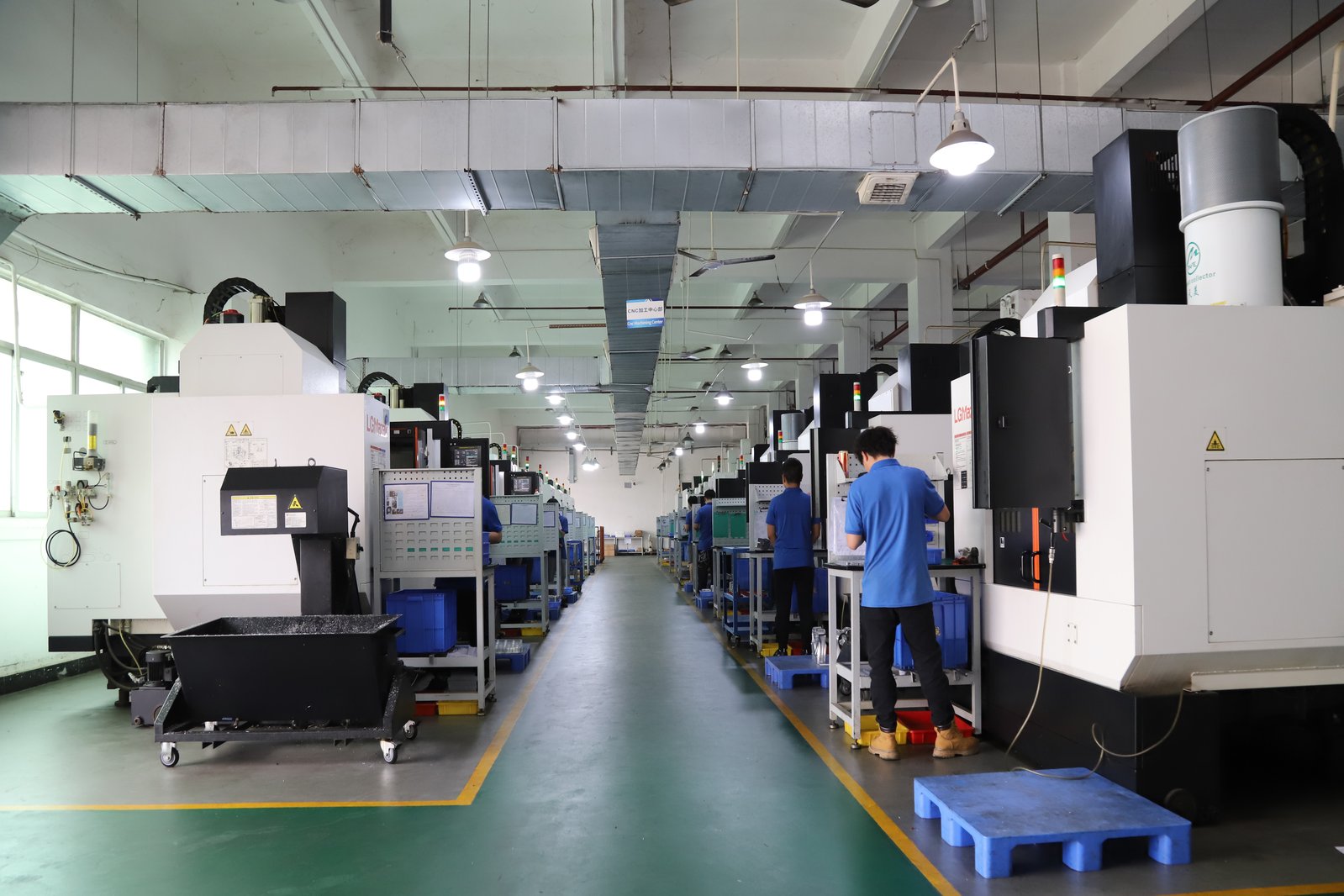
Every custom component starts as a question with several answers: how should this be made, and from what? A bracket or housing that reaches your desk as a drawing could be machined from solid, cast or forged near-net and then finished, fabricated from sheet, or built additively, and each route carries a different price, lead time, and set of properties. The buyer's job is not to pick the cheapest number but to pick the route that fits the geometry, the quantity, and what the component must do. This article compares the process paths for custom components and gives a decision framework that keeps the choice honest.
Which process alternatives compete for a custom component?
Custom components are built to print, and the print can be satisfied by several routes. Machining from solid stock — milling, turning, and mill-turn — is the default for good reasons: no tooling, fast starts, and tight tolerances. Investment casting and other casting routes produce near-net shapes that save material on complex geometry, at the price of tooling and lead time. Forging produces blanks with worked grain flow where the specification demands it. Sheet metal fabrication wins on plate-like parts where cutting and bending replace machining. Cold heading makes simple high-volume parts like pins and studs cheaply. And additive manufacturing builds geometry that machining cannot reach, without tooling.
Keep one fact in view across all of them: very few custom components ship straight from a casting, forging, press, or printer. The critical bores, threads, faces, and tolerances are machined after the near-net process, almost without exception. So the real decision is not "machine it or cast it" but "start from solid, or start near-net and finish by machining", and the machining capability question never disappears, it just moves along the chain. A supplier that can do both the near-net coordination and the finish machining is the natural home for either route.
When does casting plus finish machining beat solid stock?
Casting earns its place on geometry that would waste most of a solid block. A housing with internal cavities, thin walls, and complex external form is expensive to machine from a billet because most of the billet becomes chips, and the machining time is spent removing metal rather than creating features. Investment casting delivers that geometry near-net, and the finish machining then touches only the critical bores, faces, and threads. The economics depend on quantity: the pattern and its qualification are tooling costs that spread across the run, so casting wins where volume is high enough and loses at low volume, where the tooling lands on a few parts.
Two qualifications keep the casting decision honest. First, cast material has its own certification and its own defect risks — porosity, inclusions, and property variation that the casting source must control — so the casting supplier and its inspection become part of your quality chain. Second, a cast component that still needs the same finish machining has not removed the machining cost, only moved it downstream. When you compare quotes, compare the whole route — casting plus finishing at your real quantity — against machining from solid, on the same material and the same drawing.
When does forging earn its place in a component program?
Forging is specified for a reason that has nothing to do with cost per kilogram: grain flow. A forged component has its grain aligned with the part shape by the hammer or press, which gives better fatigue performance in highly loaded applications than a component machined from stock, whose grain runs straight along the bar regardless of the part. Where the drawing or the governing specification calls for forged material — in aerospace and other fatigue-critical work — that requirement settles the route before any cost comparison begins. Where the drawing does not demand it, forged blanks rarely beat bar or plate on price at the volumes most buyers order.
For the buyer, a forging flow-down is a transaction with its own rules: the forging dies are your tooling, the forging source needs qualification, and the forged blank still needs finish machining on the critical features. The honest conversation with a machining supplier is whether to quote the finish machining on a customer-supplied forging, or to manage the whole chain. A full-service custom component manufacturer can coordinate both, which keeps the hand-offs — and the arguments about whose tolerance caused a problem — inside one accountable supplier.
When does fabrication beat machining for a component?
Sheet metal fabrication is the most overlooked competitor to machining, and it wins more often than buyers expect. A component that is essentially a plate with holes, cutouts, and bends — a cover, a mounting plate, a chassis panel — can be laser-cut and bent for a fraction of the cost of machining the same shape from solid, and the gap widens with quantity. The tolerance story is different, though: fabrication holds bend angles and cut geometry to looser bands than machining, so the design must tolerate that looseness, and any precision feature — a locating bore, a mating face, a tapped hole pattern that must align — still needs machining afterward.
The winning move for many components is hybrid: route the plate-like body to fabrication and the precision features to machining, then keep both under one supplier so the interface is managed rather than negotiated. A component that needs a fabricated body with machined bosses and threaded holes is often cheaper and faster through one shop that does both, because the vendor hand-offs and their tolerance disputes disappear. When you send a drawing for review, ask which features could move to fabrication and which must stay machined — a good manufacturer will tell you where your drawing is paying machining prices for plate-like geometry.
When does additive manufacturing genuinely earn its place?
Additive manufacturing wins in two specific situations, and loses everywhere else. It wins where the geometry is impossible to machine — internal conformal channels, lattices, or a component that would otherwise be an assembly of several machined parts and is now built as one. It also wins at very low volumes where tooling would be wasted and the part is simple enough to tolerate additive's surface and tolerance limits. Outside those cases it loses on every axis a custom component cares about: surface finish that requires machining anyway, tolerance that depends on the build, cost per part that stays high, and a material certification story more complex than a mill certificate on standard stock.
The pattern repeats what casting showed: additive components that matter are finish-machined on critical features. So the practical comparison is never "machine it or print it" in the abstract — it is "machine from solid, or print and then machine the critical surfaces". Unless the design exploits what additive can do that machining cannot, the machined route is cheaper, faster, and easier to certify. Use additive where it changes the design, and machining where the component is a conventional machined part doing a conventional job.
Which decision variables matter most — geometry, quantity, or properties?
Three variables decide the process path, and they matter in a fixed order. Required properties come first: if the drawing or spec demands a forging, or a cast condition, or a specific material form, that requirement is not negotiable. Geometry comes second: a component that is mostly solid fits inside stock and belongs on a machine; a component that is mostly empty space belongs in a near-net process at volume. Quantity comes third and settles the tooling economics. The table below summarizes the typical calls.
| Scenario | Likely route | Why |
|---|---|---|
| Solid bracket or shaft, low to medium volume | Machine from bar or plate | No tooling, one-piece capable, clean certification |
| Complex housing with cavities, high volume | Cast near-net + finish machining | Tooling amortizes; less material wasted |
| Fatigue-critical part per specification | Forging + machining | Grain flow required by the drawing |
| Plate-like cover or mounting plate | Fabrication + machined features | Laser cutting and bending beat machining on plate |
| Internal channels machining cannot make | Additive + finish machining | Geometry that does not exist any other way |
| Precision bore, thread, or seal face | Machining, then grinding where needed | ±0.003 mm milling/turning, ±0.002 mm grinding |
Notice how many rows end in a machining operation. Custom components carry tolerances and features that near-net processes cannot hold as-formed, so machining is not only a standalone route — it is the finishing step that every other route needs. Choosing between routes is really choosing where the machining happens and what the starting material is, and both choices deserve to be explicit in the quote.
How does the material itself constrain the route?
Material availability narrows the process options before cost enters the conversation. Some alloys are bought as bar, plate, or forging stock; some are available as castings; some exist only in certain forms. A component specified in an alloy that is only available as a casting cannot be machined from bar, and a component that needs a wrought condition with certified properties may not exist as a casting at all. The drawing's material callout — grade, condition, and form — therefore decides part of the route before any quote comparison begins.
Material also sets the machining behavior wherever machining appears. Free-machining grades like 303 stainless, 12L14 steel, and 6061 aluminum cut fast and hold fine finishes, which keeps component prices low; gummier or harder alloys — 316 stainless, titanium, PEEK — cut slower and cost more per part. When you compare a machined route against a cast or forged one, compare on the same material, because comparing different grades is comparing different products. A manufacturer that verifies incoming material against its certificate — the factory behind this site checks every lot — is closing the gap between the grade on the drawing and the grade in the component.
How should a buyer compare quotes across process routes?
Process routes produce different-looking quotes, and the buyer's job is to normalize them. Compare total cost per delivered component over your real quantity, not unit price: a cast or forged route carries tooling to amortize, while a machined route carries material waste the others avoid. Add lead time — near-net routes need tooling before the first part exists, machined routes start when stock is bought. Add the documentation value: a mill certificate on standard stock is a simpler quality story than a casting or forging certification with its own testing. And add risk, because a new casting or forging source is a new qualification, while certified bar or plate is a known quantity.
The practical move is to ask each supplier to state the process route in the quote — from solid, from a casting, from a forging, fabricated — with the starting material and its certificate. Two quotes at the same price can be two different processes, and the cheaper-looking one can hide the tooling or the material condition the other states openly. Send the drawing with your annual quantity and target date, and let the manufacturer recommend the route; a supplier that makes custom components daily will tell you honestly when your part should not be machined at all, which is the most useful answer a quote can give.
What is the buyer's decision checklist for a custom component?
Run any custom component through this short sequence before you commit to a process.
- Read the drawing first: does it specify forged material, a cast condition, or a bar and plate standard? Requirements override cost.
- Sketch the waste: is the component most of a block, or does most of the block become chips? Waste favors a near-net route at volume.
- Count the precision features: tight bores, threads, and geometric callouts mean machining is required — the only question is where it happens.
- Know your quantity and timeline: low volume and urgent dates favor machining from solid; volume and schedule favor tooling routes.
- Check the material form: is the specified alloy available as bar, plate, forging, or casting, and does the drawing say which?
- Normalize the quotes: same lines, same quantity, same material, process route stated in writing.
There is no universally right process for a custom component — only the right process for the drawing, the quantity, and the required properties. Machining from solid is the default because it starts fast, needs no tooling, and holds tolerances the alternatives cannot reach without finishing on a machine tool anyway. Where the component outgrows the default — complex form, fatigue requirements, or volume that justifies dies — the alternatives earn their place. The buyer who chooses the route on the framework rather than the first quote gets the component that fits the application.
Frequently Asked Questions
When should a custom component be machined from solid instead of cast or forged?
Machine from solid when quantity is low, lead time is short, the geometry fits within stock, and the material is available as certified bar or plate. Casting or forging earns its tooling when quantity amortizes it and the part needs near-net form or grain flow that solid stock cannot provide.
Is additive manufacturing a realistic alternative for custom components?
Additive wins on internal features that machining cannot make and on very low volumes with no tooling. For conventional hardware it loses on surface finish, tolerance, cost per part, and certification, and most additive parts are finish-machined anyway, so machining is still in the route.
When does fabrication beat machining for a component?
Fabrication wins on plate-like parts — covers, brackets, mounting plates — where laser cutting and bending replace machining at a fraction of the cost. Fabrication holds looser tolerances, so precision bores, threads, and mating faces still need machining afterward.
Which tolerances can machining hold compared to alternatives?
Milling and turning hold ±0.003 mm and precision grinding reaches ±0.002 mm, with Ppk ≥ 1.67 at the initial study on critical characteristics and Cpk ≥ 1.33 on general characteristics. Capability is reported per characteristic: every report names the feature, its tolerance band, the sample size, the sigma method, and the study window. Castings, forgings, and additive parts rely on finish machining to reach such bands, so the alternatives usually end on a machine tool anyway.
How do I compare costs across process alternatives?
Compare total cost per delivered component at your real quantity — tooling amortization, material waste, secondary operations, lead time, and documentation value — not just the unit price. Ask each supplier to name the process route so the comparison is apples to apples.
Does a custom component always need machining?
No — simple parts can be fabricated or cold formed. But wherever the drawing carries tight tolerances, threads, or geometric callouts, machining is required, and most near-net processes still finish on a machine tool. The question is where in the chain the machining happens.
Not sure which process route fits your custom component?
Send the drawing and the annual quantity through the contact page — the process review will recommend the route and explain the cost basis, so you can compare alternatives on the same terms.