
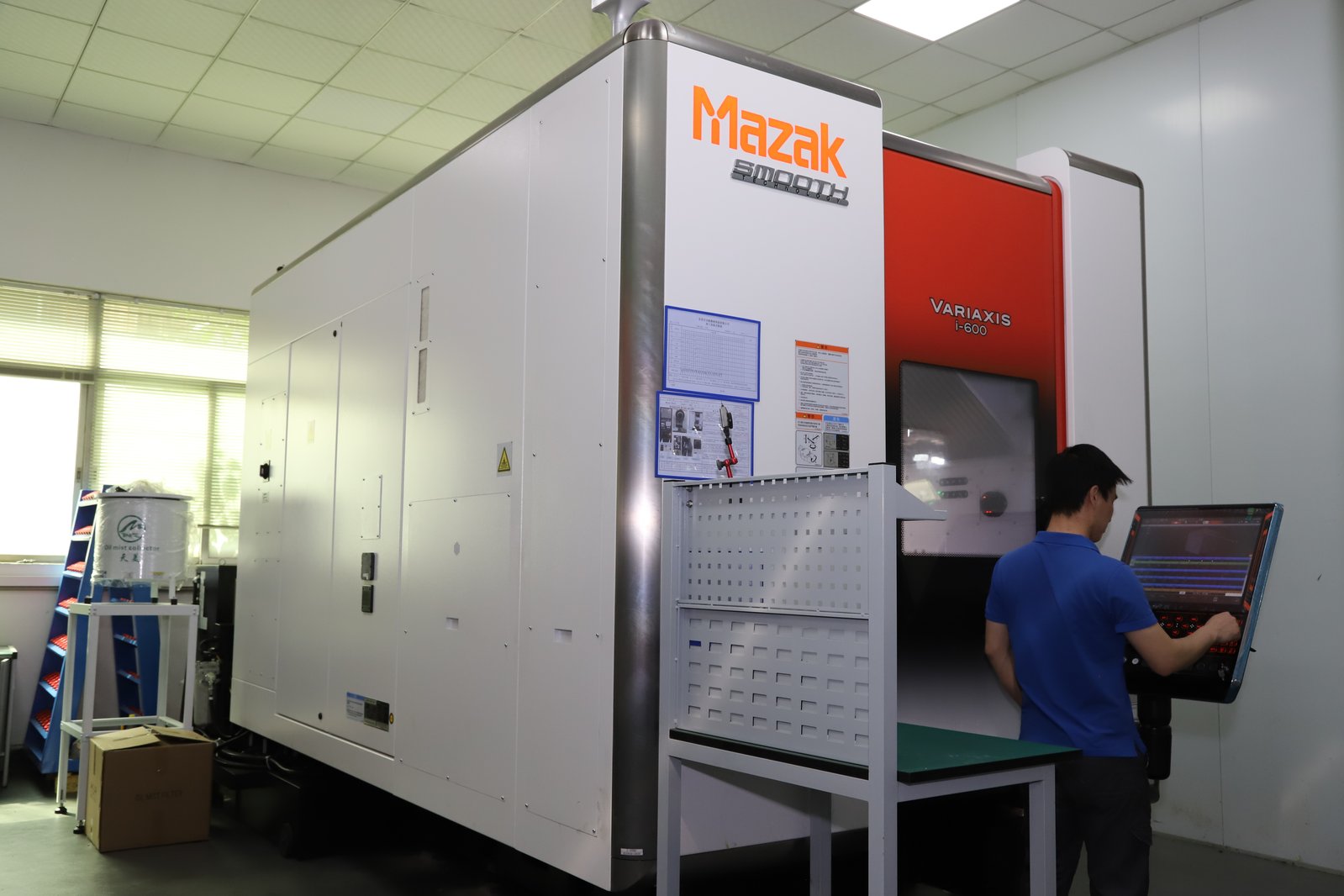
Buying custom components means trusting a supplier with your drawings, your material specifications, and your schedule, and when that supplier is across an ocean, the trust has to be built on evidence rather than instinct. You cannot fully qualify a manufacturer from a browser, but you can screen one well enough in thirty minutes to know which candidates deserve your drawing and a first article order. The screen has five steps: confirm the entity, read the certificates, weigh design-for-manufacturing quality, probe material breadth, and send one test RFQ. This article runs through each step and the red flags that end the conversation.
Why does the screen matter more for custom components than for commodity parts?
Commodity parts — standard fasteners, off-the-shelf blanks — carry specifications that are fully defined by a standard, so the supplier risk is narrow. Custom components are the opposite: every feature is defined by your drawing, every material choice is yours, and the supplier's judgment shows up in a hundred small decisions from quoting to inspection. A manufacturer that reviews your drawing before pricing it, flags the features that will be expensive, and asks what the component does is protecting your interests; a shop that returns a one-line price is treating your drawing as a shape to be cut with no questions asked.
That is why the screen matters so much on custom work. The difference between a good manufacturer and a price quote shows up in the RFQ answers, and the difference between them is worth more than the price gap, because it appears in every batch: material verification that catches a wrong alloy, first article inspection that catches a wrong feature, and change control that catches a silent process change before it becomes a bad part. Thirty minutes of screening per candidate is cheap against the cost of a wrong supplier on a component that carries your product's function.
Which entity checks separate a manufacturer from a trading desk?
The highest-value check is the legal entity. Ask for the registered company name and its registration or business license number, then verify it independently against the public registry — a manufacturer hands the number over without hesitation. Check that the registered business scope includes machining or manufacturing, because a scope that reads "import and export" describes a trader. Check that the registry address matches the workshop address you are given, and confirm that the entity issuing the commercial invoice and packing list is the same entity that owns the floor, so your contract and your customs entry name one company.
A trading desk is not automatically a bad supplier — some traders run excellent chains — but it is a different transaction, with a layer of margin and a layer of indirection between you and the factory's quality system. On custom components, where the material certificate and inspection report are part of the product, dealing with the manufacturer directly is cleaner. A live video call settles the question faster than any document: ask to see the machining floor and the inspection bench, and a real manufacturer can show both in seconds. Reluctance to do that is information.
Which certificates and quality signals should you read first?
Read the supplier's quality documentation the way an auditor would. ISO 9001:2015 is the baseline; IATF 16949:2016 (product design excluded) and ISO 14001:2015 are additional signals of documentation and process discipline — the factory behind this site holds all three, with its inspection workflow described on the quality page. What matters more than the certificate name is the scope page: a scope that names machining processes at this location is evidence, while a scope covering unrelated activity is decoration. And look for the quality story beyond the certificates: what instruments verify the parts, what inspection reports look like, and whether the site names its measurement equipment rather than describing "full inspection" in the abstract.
On custom components, two quality signals deserve specific attention. The first is material verification: a supplier that verifies incoming stock against its certificate — the factory behind this site checks every lot at receiving — closes the gap between the grade on your drawing and the grade in the component. The second is process breadth in the quality system: a supplier that runs milling, turning, grinding, and finishing under one quality system can trace a component across the whole chain, while a supplier that outsources every step hands you a chain of vendors and a chain of hand-offs. The parts page of this site is an example of how scope is presented.
How do you judge design-for-manufacturing quality from a distance?
Design-for-manufacturing quality is the most reliable predictor of a good custom components supplier, and you can probe it from a distance. Send a drawing and watch what comes back: a manufacturer that does real DFM will comment on the expensive features — the deep pocket that needs a long tool, the tight tolerance on a feature that does not need it, the sharp internal corner that cannot be cut as drawn — and suggest changes that lower cost without changing function. A shop that returns a price with no comments has not read your drawing as an engineer would, and that is exactly the reading your component needs.
The DFM response also tells you whether the supplier is routing the work properly. A component with both turned and milled features should be reviewed for mill-turn, a multi-face housing for the axis count it needs, a plate-like part for fabrication. When a supplier comments on the route as well as the geometry, it is thinking about how the part will actually be made, which is the thinking that keeps your component on schedule and in tolerance. The services page of this site describes the process range that a DFM review draws on, from 5-axis milling to finishing.
Which material questions belong in the screen?
Material breadth matters on custom components because the material is where cost and certification live. Ask what the supplier machines routinely — aluminum, stainless, alloy steels, titanium, engineering plastics — and match it against your drawing. A shop that cuts your alloy every week quotes it more accurately and machines it more reliably than one that sees it twice a year. Ask how material is verified at receiving, because the certificate story on your component starts at the supplier's door, and ask whether the shop buys to the grade and standard on your drawing or accepts stockist equivalents, because substitution is the classic silent failure on custom work.
Ask about the process boundary too, because an honest supplier states where its capability ends. Titanium stress relief above a certain temperature, for example, may be placed with a qualified partner rather than claimed in-house, and a supplier that names its boundary is more trustworthy than one that claims everything. The material-process matching the site's FAQs describe is exactly the discipline that keeps a material list honest: the alloy sets the cutting speed, the tool wear, and the price, and a supplier that understands that will quote your material accurately and flag it when a cheaper grade could do the job.
What should your test RFQ contain, and what do the answers reveal?
The test RFQ is the most information-dense step of the screen, and it should carry a drawing of a component you genuinely intend to buy, not a decoy. Include the material grade and condition, the order and annual quantity, your target date, and your documentation requirements, such as a material certificate or inspection report. Then read the reply like a diagnostic. Does the supplier ask questions back about datums, critical features, materials, or finishing? Questions are the signature of an engineer planning to make your component. Does the quote name the process route, the machine type, and what is included? A quote that states its assumptions is comparable; one that returns a single number is a price attached to unknown assumptions.
Add the commercial terms to the same screen. Ask which Incoterm the quote is based on and what the price includes — material, finishing, inspection, and packaging should be named lines. And ask about payment structure: a deposit to cover material with the balance tied to inspection milestones is normal on custom work, while pressure to pay most of the order before any evidence exists is a signal worth noting. Read response time and language the same way — a serious export manufacturer answers in clear English within a working day because it has structured the communication, with a named engineer and a quote template rather than a one-line price.
Which red flags should end the conversation?
Keep a running tally as answers come back, and act on it. Disqualifying red flags include: no verifiable registration number, or one that does not check out; a business scope without machining; a certificate that cannot be shown or whose scope does not match; an address that does not line up with the registry; a quote dramatically below the others with no stated reason; refusal to name the process route; no engineering questions about your drawing; and replies made only of reassurance with no substance. Each flag points to a failure mode that will cost you later, and any one of them is enough to move on.
Price deserves a special warning on custom components. A very low quote usually means one of three things: an operation was omitted, a cheaper material was assumed, or the inspection and documentation you asked for will be billed as extras. All three appear later as change orders or disputes. Compare quotes only from suppliers who passed the screen, and compare them on the stated route and inclusions. The lowest number from a screened manufacturer is meaningful; the lowest number from an unknown one is a gamble wearing a price tag. Keep a one-page scorecard with a column per supplier and rows for each check, so the comparison runs on criteria rather than on whoever replied most recently.
How do you confirm a shortlisted supplier before a large order?
The screen produces a shortlist, and the decision comes from parts. Place a first article order at the quantity you actually need and treat it as the qualification event. Review the first article inspection report against the drawing — tight dimensions should carry believable measurement data from a suitable instrument, with the instrument named. Check the material certificate against the grade and condition on the drawing and confirm the heat number matches the delivered stock. Ask for photographs of the actual component or a video call where it is pointed at on the bench. If the component is tight or the quantity is large, a third-party inspection before the balance of payment is inexpensive insurance.
Then scale deliberately. A supplier that delivers a clean first article with honest records earns the next order; one whose numbers do not survive a second measurement does not. Keep the screen's paperwork — the registration number, the certificate scopes, the quote's stated route — because it becomes the baseline for later audits and repeat orders. Most sourcing failures on custom components are not machining failures; they are verification failures, and every gate in this screen is a verification gate. Run them in thirty minutes, then let the first article finish the job.
What is the 30-minute workflow, step by step?
Here is the whole screen as a timed checklist to run against any candidate.
- Minutes 1–5 — Entity: Ask for the registered name and number, verify the scope includes machining, and confirm the address matches. A live video call settles manufacturer versus trader.
- Minutes 6–10 — Certificates and quality: Ask for ISO 9001:2015 as the baseline, note IATF 16949:2016 (product design excluded) and ISO 14001:2015, and read the scope pages and the inspection story rather than the certificate names.
- Minutes 11–15 — DFM and material: Send a drawing and gauge the DFM comments, and probe material breadth, verification at receiving, and honest process boundaries.
- Minutes 16–25 — Test RFQ: Send the real drawing with material, quantities, target date, and documentation requirements, and read the reply for engineering questions and a named route.
- Minutes 26–30 — Score: Tally green and red flags, normalize any quotes on route and inclusions, and shortlist the suppliers who earn a first article order.
Thirty minutes per candidate does not replace the first article — nothing does. It filters out the suppliers who would waste your next quarter, so the drawing, the sample, and the inspection report go to the manufacturer that deserves them. On custom components, where the material certificate and the measurement data are part of the product, the screen is not bureaucracy; it is the difference between buying a component and buying a promise.
Frequently Asked Questions
Can I really qualify a custom components supplier online?
You can screen, not fully qualify. Thirty minutes of structured checking — entity, certificates, DFM quality, material breadth, and one test RFQ — removes most of the risk and tells you which suppliers deserve a first article order. The sample and its inspection report do the final qualifying.
What makes a manufacturer different from a commodity job shop?
A manufacturer reviews the drawing before quoting, names the process route, flags manufacturability issues, verifies incoming material, and offers a first article. A commodity shop returns a price and waits. The questions it asks back at the RFQ stage tell you which one you are dealing with.
Which certificates should a custom components supplier hold?
Start with ISO 9001:2015, with IATF 16949:2016 (product design excluded) and ISO 14001:2015 as additional signals of discipline, and always read the certificate scope. A scope that names machining at this location is evidence; a certificate for unrelated activity is decoration.
What should my test RFQ contain?
A real drawing of the component you intend to buy, the material grade and condition, the order and annual quantity, your target date, and your documentation requirements. The supplier's questions back tell you more than the price does.
Which red flags should disqualify a supplier?
No verifiable entity, certificates that cannot be shown, a scope without machining, quotes that refuse to name the process route, no engineering questions about your drawing, and replies full of reassurance with no substance. Any one is enough to move on.
How do I verify quality before placing a large order?
Place a first article order and review the inspection report against the drawing, check the material certificate, and ask for photos or a video call on the actual component. For a tight component or a large quantity, a third-party inspection before the balance of payment is reasonable.
Ready to run the screen against a real manufacturer?
Send the drawing and your qualification questions through the contact page — the response will include the entity details, certificates, process route, and a first article offer, all checkable in writing.