
Custom medical components occupy a demanding corner of manufacturing procurement. Unlike a catalog part with years of history, a custom component exists first as a drawing and a device requirement, and its first production lot must simultaneously prove the process, generate the evidence, and satisfy a review that gates the whole device program. There is no prior batch to borrow from and no established record to point to.
That makes procurement a discipline rather than a transaction. The buyer's job is to hand the machining shop a package that can be governed — a drawing that names every material and functional requirement, an agreed measurement method, and a release process with an owner — and then to hold the shop to the record that package produces. This guide walks that discipline from the RFQ to the audit, using build-to-print machining under the device maker's quality system as the working model.
1. What is different about a custom component versus a catalog device part?
A catalog part carries its history with it: the drawings exist, the process is proven, the tooling is amortized, and the quality record spans years. A custom component carries none of that. Its first lot pays for the process design, the measurement program, and the first-article evidence, and every later lot is judged against what that first lot establishes. The first order is not procurement; it is a qualification with a production quantity attached.
The device context adds a second difference. The custom component feeds a specific device file, so its evidence must reconcile with that file — the material certificate, the dimensional report, and the statement of conformity have to cite the same revision and the same lot that the device records will reference. A mismatch that would be a nuisance on a commercial part is a finding on a medical component, because the record is part of the product.
The practical consequence is that the buyer should design the first lot as the anchor of everything that follows. Choose the material and condition for the production part, not for the sample; define the inspection method for the production release, not for a one-off check; and require the documentation format that the device file will retain. The first lot that is designed this way produces a process and a record that scale; one designed as a sample produces a part and a promise.
2. What belongs in the drawing package a machining shop can govern?
The drawing package is the contract between the device design and the machining floor, and its completeness decides whether the shop can be governed. The core is the fully dimensioned drawing with the material grade and condition, the datum scheme, and every critical characteristic expressed with GD&T against those datums. Around the core sits the context the shop needs to interpret it: the surface finish and where it applies, the edge conditions, and a note on what the component does, so the engineer can read function into the tolerances.
A governing package also states what it does not allow. The material is named, not suggested; the certificate requirement is written, not implied; the finish is defined on the faces where it matters, not left to interpretation. Every open point in the package is an assumption the shop will make, and assumptions on a medical component surface at the audit rather than at the quote. The package that answers the shop's questions before they are asked is the package that can be machined and documented without drift.
The revision control of the package is part of the package. The drawing revision that governs the order should be stated in the PO and repeated on every document that ships, because the device file will file the package by revision. A shop that machines to the wrong revision, or a buyer who sends an unmarked change, has created a record that cannot be trusted, and on a medical component, an untrusted record is worse than an unusable part. The range of components that pass through this package discipline is shown on the parts page.
3. Which materials and conditions should the custom RFQ name?
The material line of a medical custom RFQ is a functional decision, not an input field. 316L stainless appears where corrosion resistance and cleanability are the requirements, and the RFQ should name it with the certificate expectation attached. 17-4PH appears where strength after aging matters, and the RFQ should name the condition — H900 through H1150 — because the condition decides whether the shop machines soft and ages afterward, and where the heat treatment sits in the route. Titanium, where strength-to-weight or biocompatibility drives the design, should be named in its grade and temper with traceability to the heat expected.
Polymers carry their own naming discipline. PEEK is specified by grade and its lot documentation travels with it; the medical plastics need their grade designation confirmed, because machined appearance does not reveal certification. The polymer RFQ should state the material claim the certificate must back, so the shop procures stock that matches the device file rather than an economical substitute.
The condition question reaches into the machining process. A hardened or aged material cuts differently from its annealed state, and a component that must be machined soft, hardened, and finish-machined carries a two-stage route with its own inspection points. The RFQ that names the condition lets the shop plan the route, price the steps, and document the heat-treatment record from the start. The material and the process are one decision on a medical component, and they belong in one RFQ.
4. What tolerance and finish strategy survives the device review?
The tolerance map that survives a device review is the one drawn by function. The features that mate, seal, or locate carry tight callouts against the datum scheme; the geometry that only needs to exist runs at general tolerance. On a custom medical component this selectivity is doubly valuable, because every tight callout becomes a line in the inspection report and a point in the device record — tightening a cosmetic surface adds record weight without adding function.
The working bands are the practical ones: milling and turning at ±0.003 mm, grinding at ±0.002 mm, with capability targets such as Ppk ≥ 1.67 initial on the characteristics the buyer marks as key. What makes those bands real on a custom component is the measurement method agreed at quoting — the CMM program, the gauging, and the sampling rule — because a tolerance that cannot be measured with the agreed method is a tolerance that will be argued about at the first article. Method before order is the rule.
Finish deserves the same precision of language. A sealing face, a sliding interface, or a cleanable surface carries a finish that behaves functionally, and the drawing should name the finish on those faces and leave the rest cosmetic. Where passivation, electropolishing, or a machined surface closes the requirement depends on the material and the application, and that decision belongs in the RFQ so the finish record ships with the lot. The finish practice the shop applies is documented on the quality page.
5. How does the first article become the anchor of the lot record?
The first-article inspection is the event that turns a custom drawing into a governed configuration. The machining supplier measures every characteristic against the released drawing revision, in the buyer's FAI format or an equivalent such as AS9102 where the program requires it, and produces the package with the method and the data behind each reading. The device side reviews it and, on approval, releases production. From that point the first article is the reference every later lot compares against.
The anchor only works if the review operates like a gate. Production waits on it, so it needs a schedule, an owner on each side, and a stated consequence for failure — a corrected process, a new sample, and a restated date. A first article that sits unreviewed while production waits is not a gate; it is a bottleneck with the safety left out. The buyer who books the review before the sample ships has protected the schedule and the configuration at once.
The first article also fixes the repeat-order logic. Its data and method become the baseline for the SPC charts and the batch releases that follow, and its approved configuration is what the shop is authorized to reproduce. A change to the drawing after approval triggers a new or partial first article, which is why the revision rules and the first-article rules belong in the same clause of the order. The anchor holds the process steady until the drawing deliberately moves it.
6. What evidence must travel with each lot of a custom component?
The lot record is the deliverable that makes a custom medical component usable in a device assembly, and its contents should be defined before the order, not assembled at shipping. The baseline is the dimensional report on the critical characteristics, the material certificate reconciled to the lot actually machined, and a statement of conformity to the drawing revision. Where the spec demands it, the record adds the finish data, the heat-treatment record, and the first-article reference.
The documents have to reconcile, and reconciliation is a check the buyer should perform at receiving. The heat number on the certificate should match the lot on the shop traveler; the dimensional report should cite the same revision as the statement of conformity; the finish data should reference the faces the drawing named. A disconnect between documents is the first symptom of a control failure, and it is cheaper to find at the dock than at the audit or the complaint.
The record's useful life outlasts the shipment. When a question about a specific lot arrives months later, the package must surface with the part, which means the shop files by component identity and lot rather than by invoice. The buyer should state the retention expectation in the order and verify that the shop can retrieve a lot's package on request. The service base that produces these records is described on the services page, and a governed supplier treats the record as part of the part.
7. How do changes and deviations stay controlled on a custom part?
A custom medical component will change — the design converges, the device review asks for a feature adjustment, the material condition is revised — and each change must move through the written process or it corrupts the record. A revision is released in writing with the changed features marked; the shop confirms receipt in writing with the effect on schedule and price; and parts already machined against the previous revision are dispositioned before the new one is cut. The change is an event in the record, not an edit to it.
Deviations follow the same written discipline in the opposite direction. When the shop cannot meet the drawing as released, it issues a deviation with the facts and a proposed disposition, and the device side approves or rejects it in writing before the parts proceed. An approved deviation is a controlled exception filed with the lot; an unapproved one is a non-conformance with its own disposition path. The distinction is what lets a lot enter the device assembly with its integrity intact.
The buyer's contribution is batching and timing. Revisions that arrive together produce one controlled change cycle; a drip-feed of changes produces a series of disruptions, each restarting a confirmation loop and each touching released inventory. The order should require changes to be batched wherever the schedule allows, and the effect of each release should be stated before it is sent. Across time zones, the written, asynchronous process is what keeps the change control working when no one is awake to improvise.
8. How do you qualify and audit a machining supplier for custom medical work?
Qualification for custom medical components should mirror the production reality: run a representative component with real critical features, a real material condition, and the full documentation package as a deliverable. The qualification lot shows how the shop machines the drawing, measures the features, assembles the record, and handles the questions, and that behavior, not the sales conversation, is what will scale across the program. The cost of the qualification is the cheapest insurance the device file can buy.
The audit verifies what the qualification demonstrated. Review the first article independently rather than accepting the summary. Verify the certificates against their registrars and confirm the quality-system scope covers the machining in question. Ask the shop to retrieve a past lot's complete package from its files, because the ability to produce an old record on request is the operational definition of traceability. If the volume justifies it, visit the floor or walk it by live video, and watch where the material certificates and the inspection data actually live.
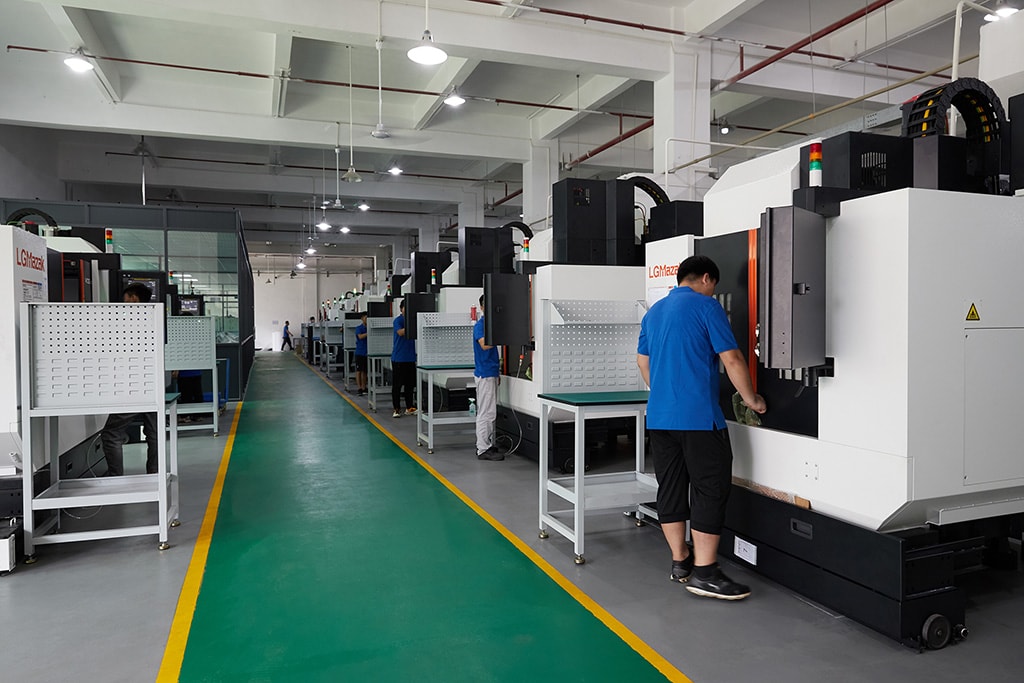
Then scale on the record, not on the relationship. A supplier that clears the qualification and the audit has demonstrated the governed process the device file needs, and its repeat lots should flow on the strength of that demonstration. A supplier that clears them only on price has demonstrated nothing durable, and the difference will surface at an audit or a complaint when the record cannot be produced. The factory behind this site, shown on the factory page, operates for its governed customers under exactly this qualification-and-record model, because on a custom medical component the record is the part.
The buyer's rule of thumb: a custom medical component is purchased as a record with a part attached. Govern the drawing package, anchor the process with a reviewed first article, ship the reconciled lot record, and qualify the supplier on the behavior that produces all three.
Frequently Asked Questions
How is a medical custom component different from a standard machined part?
The geometry is specific to one device and the evidence travels with it. There is no catalog history to rely on, so the first lot establishes the process, the measurement method, and the record, and every later lot is compared against that anchor. The buyer is procuring a repeatable, documented process as much as a part.
What should the drawing package for a medical custom component contain?
The fully dimensioned drawing with the material grade and condition, the datum scheme, the critical characteristics with their tolerance bands, the surface finish and where it applies, and a note on the application so the shop understands what the features do. A package that answers the shop's questions in advance is a package that can be governed.
Which materials and conditions should a medical custom RFQ name?
The metals that carry the device claim — 316L stainless, 17-4PH in its specified aged condition, titanium in its grade and temper — each with the certificate requirement stated. On the polymer side, PEEK and the medical plastics need their grade and lot records named. The condition matters because it decides the process route and the document chain.
What tolerances are practical on a medical custom component?
Tight bands belong on the features that function — mating tapers, sealing faces, locating geometry — and general bands everywhere else. Milling and turning hold ±0.003 mm, grinding reaches ±0.002 mm, and capability targets such as Ppk ≥ 1.67 initial apply on the key characteristics. The measurement method for those characteristics should be agreed at quoting.
How does the first article anchor the record of a custom component?
The first-article inspection measures every characteristic against the released drawing and becomes the reference every later lot compares against. Its data, its method, and its approval define the configuration the shop is authorized to reproduce. The device side should review it before production releases, on a schedule, because production waits on that review.
What evidence should travel with each lot of a medical custom component?
The dimensional report on the critical characteristics, the material certificate reconciled to the machined lot, a statement of conformity to the drawing revision, and the finish or treatment records the spec requires. The documents must reconcile with each other and with the lot, because the record is what the device file retains.
How do changes stay controlled on a medical custom component?
Through the written change process: a revision is released in writing, its effect on schedule and price is confirmed by the shop in writing, and parts machined against the previous revision are dispositioned before the new one is cut. Deviations are approved or rejected in writing before the parts proceed. The record of both is part of the lot history.
How should I qualify a machining supplier for medical custom components?
Run a qualification lot of a representative component with real critical features and demand the full documentation package. Review the first article independently, verify the certificates and the quality-system scope, and audit the shop's record handling by asking for a past lot's package. The behavior that shows up on the qualification lot is the behavior that scales.
Qualifying a supplier for a custom medical component?
Send the drawing and your documentation requirements through the contact page — the review returns with the material, measurement, and lot-record plan mapped to your device file.